Thursday, 3 May 2012

Battle of the Coral Sea

The Battle of the Coral Sea, fought from 4–8 May 1942, was a major naval battle in the Pacific Theater of World War II between the Imperial Japanese Navy and Allied naval and air forces from the United States and Australia. The battle was the first ever fleet action in which aircraft carriers engaged each other, as well as the first in which neither side's ships sighted or fired directly upon the other.
In an attempt to strengthen their defensive positioning for their empire in the South Pacific, Imperial Japanese forces decided to invade and occupy Port Moresby in New Guinea and Tulagi in the southeastern Solomon Islands. The plan to accomplish this, called Operation MO, involved several major units of Japan's Combined Fleet, including two fleet carriers and a light carrier to provide air cover for the invasion fleets, under the overall command of Shigeyoshi Inoue. The U.S. learned of the Japanese plan through signals intelligence and sent two United States Navy carrier task forces and a joint Australian-American cruiser force, under the overall command of American Admiral Frank J. Fletcher, to oppose the Japanese offensive.
On 3–4 May, Japanese forces successfully invaded and occupied Tulagi, although several of their supporting warships were surprised and sunk or damaged by aircraft from the U.S. fleet carrier Yorktown. Now aware of the presence of U.S. carriers in the area, the Japanese fleet carriers entered the Coral Sea with the intention of finding and destroying the Allied naval forces.
Beginning on 7 May, the carrier forces from the two sides exchanged airstrikes over two consecutive days. The first day, the U.S. sank the Japanese light carrier Shōhō, while the Japanese sank a U.S. destroyer and heavily damaged a fleet oiler (which was later scuttled). The next day, the Japanese fleet carrier Shōkaku was heavily damaged, the U.S. fleet carrier Lexington was critically damaged (and was scuttled as a result), and the Yorktown was damaged. With both sides having suffered heavy losses in aircraft and carriers damaged or sunk, the two fleets disengaged and retired from the battle area. Because of the loss of carrier air cover, Inoue recalled the Port Moresby invasion fleet, intending to try again later.
Although a tactical victory for the Japanese in terms of ships sunk, the battle would prove to be a strategic victory for the Allies for several reasons. Japanese expansion, seemingly unstoppable until then, was turned back for the first time. More importantly, the Japanese fleet carriers Shōkaku and Zuikaku – one damaged and the other with a depleted aircraft complement – were unable to participate in the Battle of Midway, which took place the following month, ensuring a rough parity in aircraft between the two adversaries and contributing significantly to the U.S. victory in that battle. The severe losses in carriers at Midway prevented the Japanese from reattempting to invade Port Moresby from the ocean. Two months later, the Allies took advantage of Japan's resulting strategic vulnerability in the South Pacific and launched the Guadalcanal Campaign that, along with the New Guinea Campaign, eventually broke Japanese defenses in the South Pacific and was a significant contributing factor to Japan's ultimate defeat in World War II.


Thursday, 26 April 2012

Hyūga class helicopter destroyer

The Hyūga-class helicopter destroyer (ひゅうが型護衛艦 Hyūga-gata-goei-kan ?) are a type of helicopter carrier being built for the Japan Maritime Self-Defense Force (JMSDF).[1][2] Two ships of the class were built to replace the two 7,000-ton Haruna-class helicopter destroyers. The new ships are the largest combatant ship operated by Japan since the Imperial Japanese Navy was superseded by the JMSDF.[1] The first ship in the class, Hyūga, was commissioned on March 18, 2009 and stationed in Yokosuka, near Tokyo.[3] The second ship Ise went into service on March 16, 2011 and will be stationed in Kure.
The Hyūga-class' specifications are comparable to light aircraft carriers, such as Italian Giuseppe Garibaldi, Spanish Principe de Asturias and Royal Navy's Invincible-class carriers.[4] Under the JMSDF's naming conventions, the ships are called Goei-kan (護衛艦, lit. escort ship) in Japanese and destroyer in English, as same as all the other combatant ships of JMSDF.
According to a PBS documentary, JS Hyūga is the "first Japanese aircraft carrier built since WWII."[5]
The Hyuga 's code-name (16DDH) and Ise 's code-name (18DDH) derive from the Japanese calendar, specifically the 16th year and 18th year of the Heisei reign (2004 and 2006), when the provisional title was given.[1]
Construction of the first ship Hyūga was started in 2006 and it was launched on 23 August 2007. The second was launched and named Ise on 21 August 2009.[13]
Pennant no.NameLaid downLaunchedCommissionedHomeport
DDH-181Hyūga (16DDH)11 May 200623 August 200718 March 2009Yokosuka
DDH-182Ise (18DDH)30 May 200821 August 200916 March 2011Kure

Hyūga was named after Hyūga Province (日向国 Hyūga no kuni?) (present-day Miyazaki Prefecture) on the east coast of Kyūshū, and Ise after Ise Province (伊勢国 Ise no kuni?) (present-day Mie Prefecture). They inherited the names of the Ise-class battleship Hyūga and Ise of the Imperial Japanese Navy. These two ships had been built during the World War I and served in World War II. Following the Battle of Midway, the Hyuga and Ise were converted into a hybrid battleship/aircraft carriers in 1943 with the replacement of the aft gun turrets and barbettes by a small flight deck and hangar deck with which they could launch a squadron of Yokosuka D4Y dive-bombers and Aichi E16A seaplanes.[4]
In November 2009, Hyūga participated in Annualex 21G joint naval exercise with USS George Washington and other USN and JMSDF ships to maintain the interoperability between the two navies.[citation needed]
On 11 March, 2011, the 2011 Tōhoku earthquake and tsunami struck the northeast part of Japan. Hyūga immediately moved to off the coast of Miyagi prefecture and started search and rescue operation.[14] Ise, which went into service on 16 March, also will join aid delivery operation for refuge shelters.

Monday, 2 April 2012

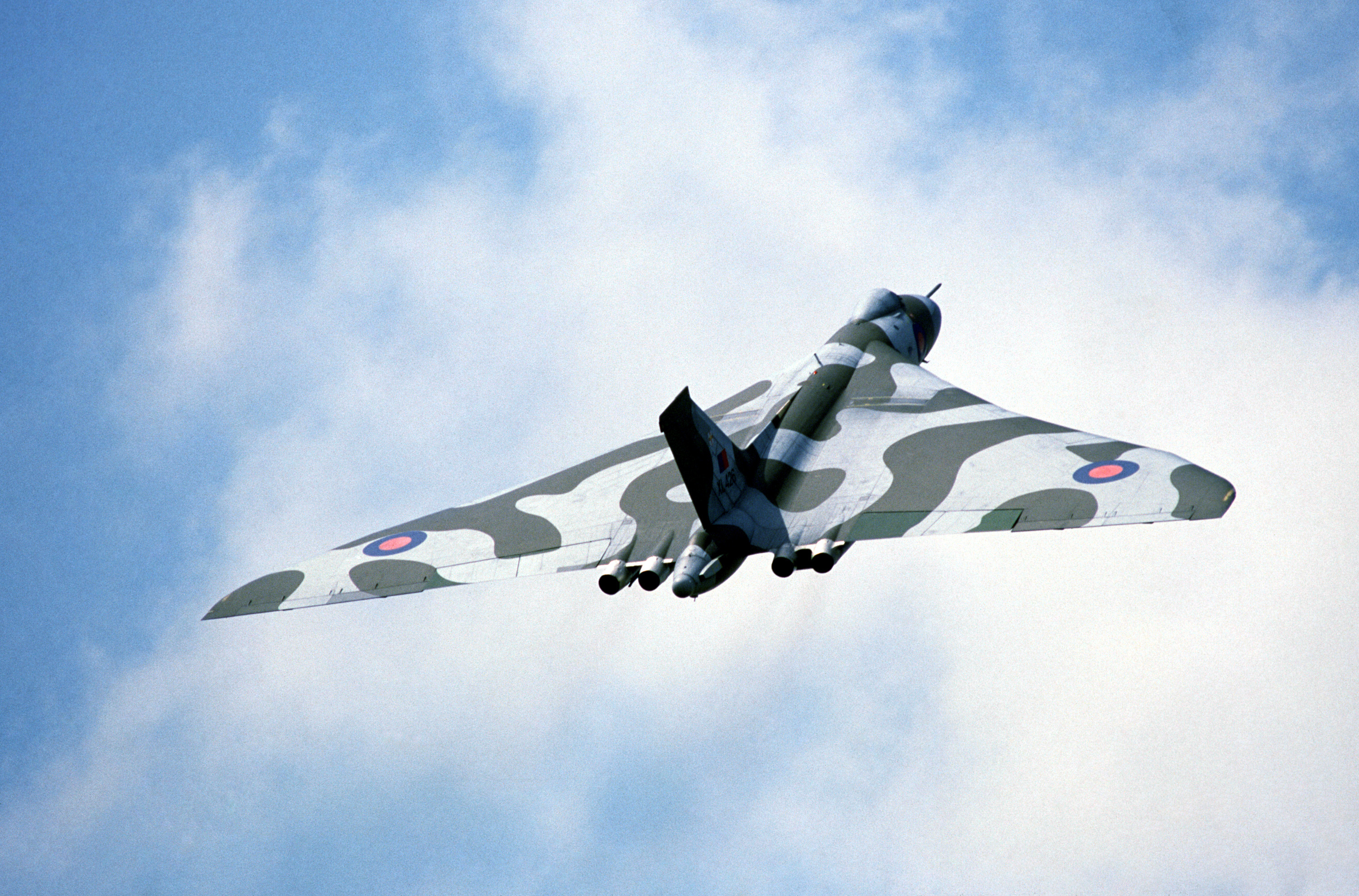
The Falklands War, 1982.

These are some pictures from the Falklands War.
File:SeaHarrier.jpgFile:Avro Vulcan Bomber RAF.JPEG

Monday, 19 March 2012

Thursday, 15 March 2012

Birds of Steel on the PS3

This is the game I want for the summer, Birds of Steel, PS3

Monday, 12 March 2012

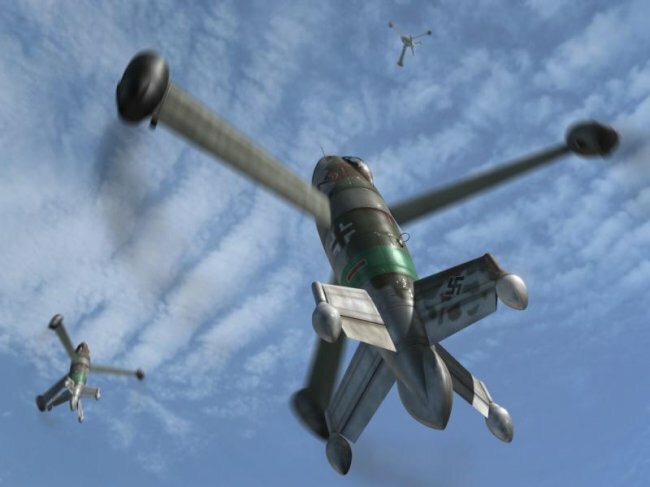
Focke-Wulf Treibflugel

The top secret German VTOL fighter.

The Focke-Wulf Triebflugel.

Powerplant, 3 ramjets on three rotating wings

Armament, 4 20mm cannon.

Wingspan, 38ft

Length, 30ft

Speed, 621mph


I nicknamed the Triebflugel "The flying Catherine Wheel".
The Treibflugel makes a cameo appearence in the Captain America movie where it was used by the Red Skull to escape from one of his factories.